

Winter pasture growth rates in most areas are slow, which makes it challenging to carry enough stock through this period while still having sufficient livestock numbers to utilise spring growth and dry feed over summer and autumn. Supplementing with starch and effective fibre when pastures are new and in their vegetative state allows farmers to significantly increase stocking rates and generally carry more stock year-round, increasing total annual production.
Winter pasture presents two main issues. Firstly, pasture growth rates in most areas slow during winter, making it difficult to carry enough stock through this period while still having sufficient livestock numbers to utilise spring growth and dry pasture over summer and autumn.
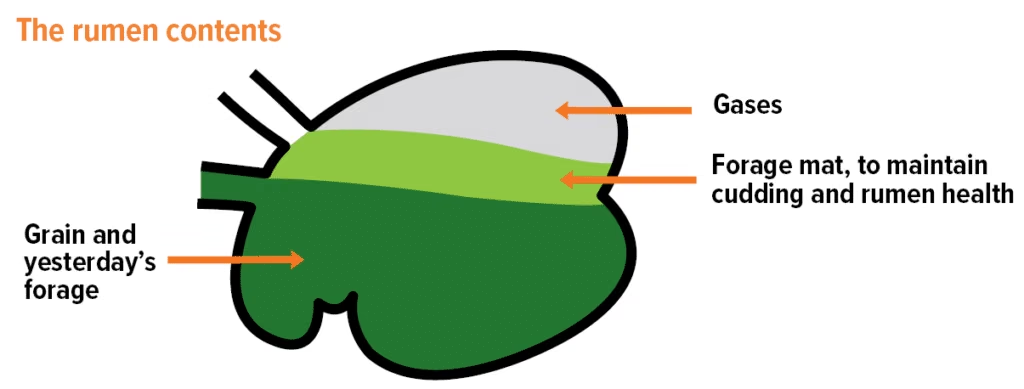
Secondly, the low NDF (Neutral Detergent Fibre) content in pasture means it breaks down quickly in the rumen, and a large proportion of the pasture can pass through before the microbial population has fully utilised the nutrients.
Because of these issues, supporting the rumen with the correct supplementary feeds can significantly improve pasture utilisation, stocking rates, and annual farm production. The benefits can be particularly high for mixed enterprises that allocate areas of the property to crop production during winter and then utilise crop residues during summer and autumn.
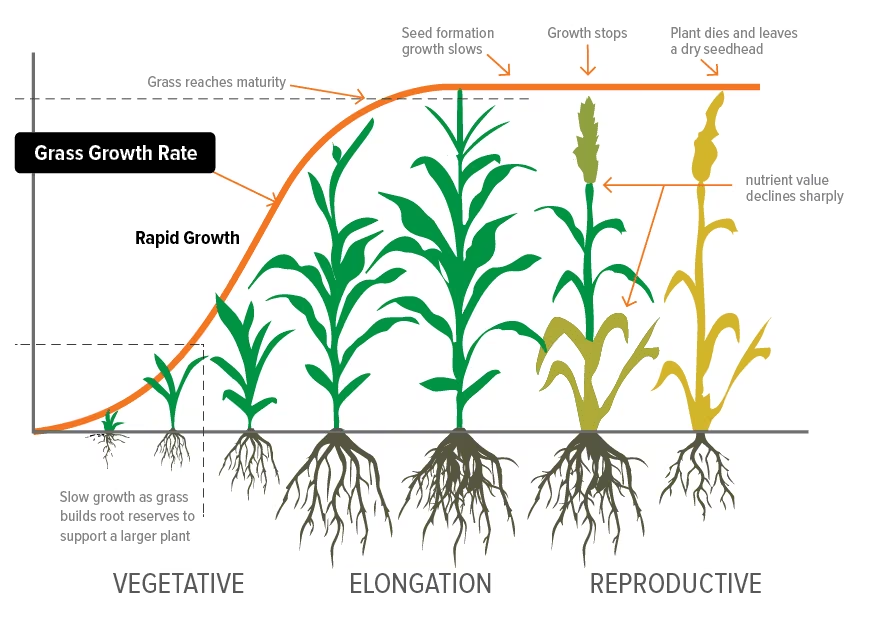
Plants in the vegetative phase have a high moisture content. Managing high moisture pastures occurs when the pasture is in the vegetative state.
The majority of the benefits from balancing high-moisture pastures are received in the period after feeding
Mixed cropping/grazing enterprises stand to gain the most from balancing high moisture pastures
In most supplementary feeding applications, the production benefits are realised during the feeding period. In the application of managing high-moisture pastures, there are benefits from achieving higher pasture utilisation; however, the majority of the benefits from running more livestock during winter are realised later. These benefits occur when the additional maternal stock produce more offspring, or when more stock can be carried through to utilise spring and summer pasture growth before being marketed.
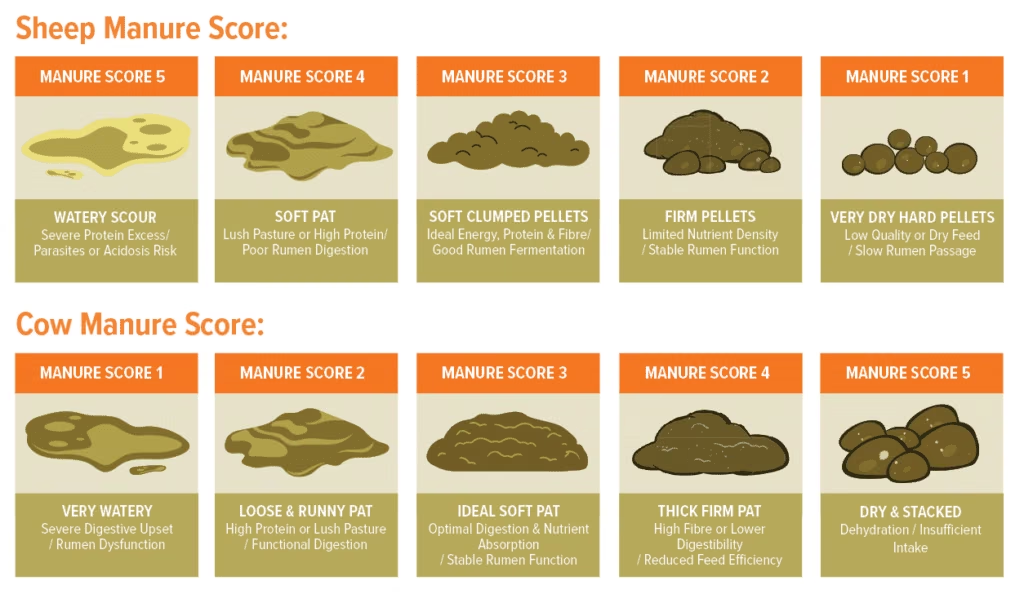
Faeces rating systems can provide a useful guide when managing high-moisture pastures and assessing whether livestock are receiving adequate effective fibre. It is important to note that sheep and cattle use opposite scoring scales. In sheep, a score of 1 represents very dry, hard pellets and a score of 5 represents watery scour, whereas in cattle, a score of 1 represents very watery diarrhoea and a score of 5 represents very dry, firm manure.
The sheep and cattle faeces scores shown below demonstrate how manure consistency can indicate rumen function and pasture utilisation. Softer, more liquid manure can indicate that feed is moving too quickly through the rumen, reducing nutrient extraction and increasing wasted feed. Supporting livestock on high-moisture pastures with adequate starch and effective fibre can help maintain healthier rumen function and more desirable manure scores. In general, sheep scores around 2–3 and cattle scores around 3 are considered indicative of good nutrient utilisation under lush pasture conditions.
Managing high-moisture pastures in livestock that cannot meet their nutrient requirements from pasture alone provides the highest return on investment. Commonly, these are pregnant and lactating animals. However, supporting all classes of stock so their rumen can digest pasture more efficiently will result in more pasture being available across the farm.
We ran several on-farm experiments that measured pasture consumption when a group of stock were supplemented to manage high-moisture pasture. You can see these trials on the Advantage Feeders website.
Calculating the additional profit generated from higher stocking rates is complex, as increased livestock numbers also increase costs and the outcome varies depending on the balance of cropping and livestock production. Benefits include:
Thin and watery manure is a lost opportunity to extract nutrients from pasture
Plants in the vegetative phase have a high moisture content and high soluble protein.
Two types of feed are needed to balance the diet:
Common supplementary feeds include:
Commencement — For managing high-moisture pastures, this supplementary feeding period commonly commences approximately three weeks after the break of season, when pasture is short and actively growing but not yet at sufficient levels for livestock to meet their requirements.
Completion — This occurs when dietary fibre levels increase to the point where pasture growth exceeds the nutrient intake of the livestock. This generally happens at the start of the spring flush, as plants enter the elongation phase.
Note: In the later stages of this supplementation period, when pasture growth is outpacing consumption, forage alone may achieve the benefits of improving rumen function without the added cost of a starch-based feed. However, if livestock have high production goals, such as most weaned animals, a starch-based feed can help manage excess ammonia in the rumen and support higher growth rates. See our “Managing Excess Protein Information Sheet”.
After adding additional costs of running 50% higher stocking rates, the extra stocking rate can often double profit/Ha
The benefit of higher stocking rates grazing pasture should be compared against the alternative of confinement feeding. Calculating the cost of confinement feeding is complex. Livestock require a wide range of energy, protein, minerals, and vitamins depending on whether the objective is weight gain, maintenance, or weight loss. Other factors include the pregnancy status of the animal and the quality and availability of paddock feed. Consult a livestock nutritionist or farm consultant for expert advice.
Note that confinement feeding may not be a practical alternative for maternal stock in late pregnancy, during lambing/calving, or during lactation.
Energy is often the limiting factor in a diet. Energy requirements for livestock can be found at the following links:
Calculating the difference in feed costs from managing with high-moisture pasture with supplementation compared to confinement feeding — advantagefeeders.com

Daily cost of feed/head = Price (per tonne as fed) / Energy density (MJ/kg of dry matter) / Dry matter (%) / 1000
Examples for a range of feeds:
In these examples, cereal straw has the lowest cost of energy.
Formula to work out cost of energy: Daily cost of feed/head = Price MJ x Daily energy requirement
Examples for a range of feeds:
A common understanding among farmers is that when stock have sloppy faeces, fibre should be added to the diet. However, there is limited scientific research linking the amount of fibre and fermentable carbohydrates required to supplement different pastures, based on digestibility (how quickly they break down) and moisture levels.
In addition, there is a wide variation in the quantity required depending on whether the objective is for livestock to gain weight, maintain weight, or lose weight. Other factors include the animal’s pregnancy status, as well as the quality and availability of paddock feed. Consult a livestock nutritionist or farm consultant for advice on the appropriate type and quantity of supplementary feed.
Common concentrate supplement amounts:
Common forage supplement amounts:
200 sheep per grain feeder, Sliding Gates Hay Feeder, or Extended Cradle Hay Feeder is recommended.
50 cattle per grain feeder, Sliding Gates Hay Feeder, or Extended Tray Hay Feeder is recommended.
Like all applications, stocking rates per feeder can be increased, but this increases the risk of uneven consumption due to greater competition for trough space. This increased risk requires closer oversight and management to identify potential uneven feed intake.
Forage component of the supplement — Hay feeders have no physical restraint mechanism over consumption and relies on the NDF (Neutral Detergent Fibre) of the forage to limit intake.
In practice, if hay is being fed and consumption is more than desired, a higher NDF feed, such as straw may be able to be substituted to achieve lower intake and lower cost while still providing the fibre component of the diet.
Concentrate component of the supplement — There are a number of factors that influence the minimum consumption achieved with the 3-way restriction system. For this application, the most important two factors are:
(Cereal grains / 4mm pellets / 6mm pellets)
Cereal grains are frequently used in this supplementary feeding application. If livestock are not sufficiently trained to the feeder and gorge on the supplement, this can lead to acidosis and, in severe cases, be fatal.
Acidosis issues can be avoided by providing untrained livestock with a safe feed, such as high-fibre pellets, in an ad-lib setting to encourage and reinforce feeding behaviour at the feeder. Once feeding behaviour is consistent, the ration can be transitioned to a cereal grain ration. While this process adds some cost, it has consistently delivered strong results with minimal cost overall and reduced risk of rumen upsets.
For the full explanation, please refer to the Advantage Feeders User Manual.